Data for the month ending – June 2026 Sr. No. Received from Pending at the end of last month Received Resolved Total Pending # Pending complaints > 3 months Average Resolution time* (in days) 1 Directly from Investors 0 0 0 0 0 0 2 SEBI (SCORES) 0 0 0 0 0 0 3 Other Sources (if any) 0 0 0 0 0 0 Number of complaints received during month against the RA due to impersonation by some other entity: 0 Note: In case of any complaints received against the RA due to impersonation of the RA by some other entity, the RA may adjust the number of such complaints from total number of received/resolved complaints while preparing the above table. Further, RA must close such impersonation related complaints after following the due process as specified by SEBI/RAASB. * Inclusive of complaints of previous months resolved in the current month. # Inclusive of complaints pending as on the last day of the month. ** Average Resolution time is the sum total of time taken to resolve each complaint, in days, in the current month divided by total number of complaints resolved in the current month. Trend of Monthly Disposal of Complaints Sr. No. Month Carried forward from previous month Received Resolved* Pending # 1 June 2026 0 0 0 0 2 May 2026 0 0 0 0 3 April 2026 0 0 0 0 4 March 2026 0 0 0 0 5 February 2026 0 0 0 0 6 January 2026 0 0 0 0 7 December 2025 0 0 0 0 8 November 2025 0 0 0 0 9 October 2025 0 0 0 0 10 September 2025 0 0 0 0 11 August 2025 0 0 0 0 12 July 2025 0 0 0 0 Grand Total 0 0 0 0 * Inclusive of complaints of previous years resolved in the current year. # Inclusive of complaints pending as on the last day of the month. Trend of Annual Disposal of Complaints Sr. No. Year Carried forward from previous year Received Resolved* Pending # 1 2026–2027 0 0 0 0 Grand Total 0 0 0 0 * Inclusive of complaints of previous years resolved in the current year. # Inclusive of complaints pending as on the last day of the year.
COMPLAINT DATA
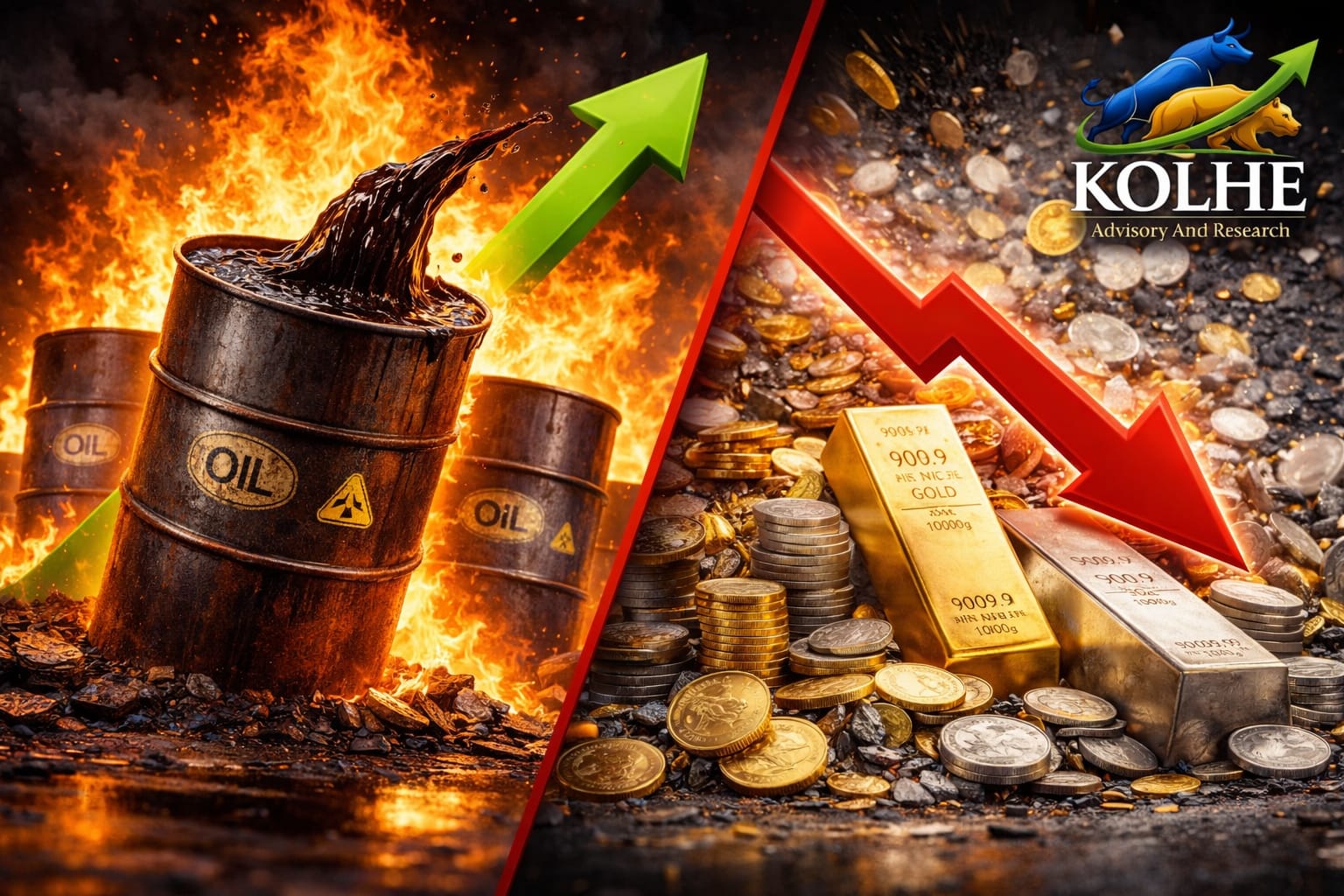
🛢️🔥 तेल की आग में पिघलेगा सोना-चांदी? जानिए सच!
ग्लोबल टेंशन का असर:ईरान युद्ध ने मचाई हलचलमिडिल ईस्ट में ईरान से जुड़े युद्ध ने पूरी दुनिया के कमोडिटी मार्केट को हिला कर रख दिया है। खासकर Strait of Hormuz जैसे अहम रूट पर खतरे के कारण सप्लाई बाधित हो रही है, जिससे कच्चे तेल की कीमतों में जबरदस्त उछाल देखने को मिल रहा है।रिपोर्ट्स के अनुसार, क्रूड ऑयल की कीमत $100+ प्रति बैरल के ऊपर पहुंच चुकी है और हालात बिगड़े तो $150-$180 तक जाने की आशंका है। Crude Oil क्यों बढ़ रहा है?युद्ध के कारण सप्लाई डिसरप्शनतेल उत्पादन फैसिलिटीज पर हमलेट्रांसपोर्ट रूट (Hormuz) पर खतराग्लोबल एनर्जी क्राइसिस यही वजह है कि क्रूड ऑयल में तेज़ी लगातार बनी हुई है। Gold-Silver क्यों गिर रहे हैं?आमतौर पर युद्ध के समय सोना-चांदी सुरक्षित निवेश (Safe Haven) माने जाते हैं, लेकिन इस बार कहानी अलग है। मुख्य कारण:मजबूत डॉलर (USD)डॉलर मजबूत होने से गोल्ड-चांदी महंगे हो जाते हैं, जिससे डिमांड घटती है। बढ़ती महंगाई (Inflation)क्रूड ऑयल की तेजी से महंगाई बढ़ रही है, जिससे ब्याज दरें ऊंची रहने की संभावना है। Interest Rate का दबावहाई इंटरेस्ट रेट में निवेशक गोल्ड छोड़कर बॉन्ड/डॉलर में पैसा डालते हैं।मार्केट गिरने पर निवेशक गोल्ड बेचकर कैश निकाल रहे हैं।इसी कारण गोल्ड और सिल्वर में भारी गिरावट देखने को मिल रही है। Crude vs Gold-Silver: बदलता ट्रेंडइस समय मार्केट में एक नया ट्रेंड दिख रहा है:पहले: War = Gold ↑अब: War + Oil Spike = Gold ↓, Oil ↑यानि इस बार निवेशक Energy (Crude Oil) को ज्यादा प्राथमिकता दे रहे हैं। भारत पर असरभारत जैसे देश, जो तेल के बड़े आयातक हैं, उनके लिए यह स्थिति और भी गंभीर है:महंगाई बढ़ेगीरुपये पर दबाव आएगाइक्विटी मार्केट में कमजोरीगोल्ड-चांदी में अस्थिरता आगे क्या?अगर युद्ध लंबा चला → Crude और ऊपर जा सकता हैअगर डॉलर मजबूत रहा → Gold-Silver दबाव में रहेंगेअगर स्थिति शांत हुई → Gold में रिकवरी संभव निष्कर्ष (Conclusion)ईरान युद्ध ने इस बार कमोडिटी मार्केट का समीकरण बदल दिया है।Crude Oil की आग में फिलहाल Gold-Silver दबाव में हैं, लेकिन यह ट्रेंड स्थायी नहीं है। लंबी अवधि में गोल्ड फिर से Safe Haven बन सकता है, लेकिन शॉर्ट टर्म में Oil ही मार्केट का किंग बना हुआ है। Kolhe Advisory And ResearchSEBI Number: INH000024000

Research-Driven Trading: The Foundation of Consistent Market Success
In today’s fast-moving financial markets, success is not determined by luck, tips, or speculation. Long-term consistency in trading and investing comes from disciplined decision-making supported by structured research and risk management. Research-driven trading is the foundation on which sustainable market participation is built. Financial markets are influenced by multiple factors such as global economic conditions, demand–supply dynamics, institutional activity, geopolitical developments, and technical price behavior. A research-based approach focuses on understanding these variables rather than reacting emotionally to short-term market noise. One of the most critical advantages of research-driven trading is clarity. When decisions are based on data, analysis, and predefined strategies, traders are less likely to be influenced by fear or greed. Clear entry, stop-loss, and target levels help manage downside risk while allowing opportunities for structured growth. This clarity becomes especially important during periods of high volatility, where impulsive decisions often lead to capital erosion. Risk management plays a central role in professional trading. Protecting capital is as important as generating returns. Research-based strategies emphasize risk–reward balance, position sizing, and disciplined execution. Instead of chasing profits, the focus remains on preserving capital and maintaining consistency across market cycles. Another key aspect of research-driven trading is transparency. Ethical market participation requires honest communication, realistic expectations, and adherence to regulatory standards. Traders and investors benefit most when research is unbiased, educational, and aligned with long-term financial objectives rather than short-term excitement. Developing a disciplined trading mindset takes time and practice. Continuous learning, reviewing market behavior, and refining strategies based on performance analysis are essential components of professional growth. Research-oriented traders understand that not every trade will be profitable, but consistency over time is achieved through discipline and structured decision-making. In conclusion, research-driven trading is not about predicting the market perfectly; it is about preparing for various market scenarios with clarity, discipline, and responsibility. Traders and investors who prioritize research, risk management, and ethical practices are better positioned to navigate market uncertainties with confidence and long-term stability.